The capacity market is a market for securing future supply capacity (kW) in advance. In Japan, the Organization for Cross-regional Coordination of Transmission Operators, JAPAN (OCCTO) opened it in FY2020 (April 2020–March 2021). Every year, OCCTO uses an auction to secure the supply capacity that will be needed four years later. This article explains the background and purpose of the capacity market and briefly summarizes developments since delivery began in FY2024.
Basics of Japan’s Electricity System
This section explains the basics of Japan’s electricity system used throughout this series.
Japan has ten regional service areas: Hokkaido, Tohoku, Tokyo, Chubu, Hokuriku, Kansai, Chugoku, Shikoku, Kyushu and Okinawa. In each area, the transmission and distribution lines are owned and operated by that area’s general transmission and distribution company (GT&D company). A GT&D company operates the grid and is ultimately responsible for matching supply and demand in its area (a role close to that of a transmission system operator in other countries). The capacity market covers nine areas, excluding Okinawa.
The frequency of electricity in Japan differs between east and west. The Hokkaido, Tohoku and Tokyo areas use 50 Hz, and the areas from Chubu westward use 60 Hz. The areas are linked by cross-regional interconnection lines (transmission lines and converter facilities that connect areas), but there is a limit on how much electricity can flow over them.
The main organizations involved are as follows.
| Organization | Role |
|---|---|
| Agency for Natural Resources and Energy (ANRE) | An external agency of the Ministry of Economy, Trade and Industry (METI). Designs the electricity system rules. Serves as secretariat of government advisory councils (meetings of experts) |
| OCCTO | Monitors supply and demand nationwide and coordinates across areas. Operates the capacity market |
| Electricity and Gas Market Surveillance Commission (EGC) | The regulator that monitors electricity trading. Also monitors bid prices in the capacity market |
| Japan Electric Power Exchange (JEPX) | The wholesale exchange for electricity (kWh). Its markets include the day-ahead market (spot market), where electricity for the next day is traded |
Revisions to the capacity market rules are discussed at the Study Committee on the Capacity Market. ANRE and OCCTO jointly serve as its secretariat.
Background
Rising market share of new entrant retailers after full retail liberalization
With full retail market liberalization on April 1, 2016, customers became able to buy electricity from new entrant retailers, that is, retailers that entered the market after liberalization.
At the time, prices on the JEPX day-ahead market were low. New entrant retailers, which sold electricity procured from the market, gained market share, while the share of the former general electricity utilities (incumbent regional utilities), such as TEPCO, declined. The former general electricity utilities are the large companies that, before liberalization, handled everything from generation to retail in each area.
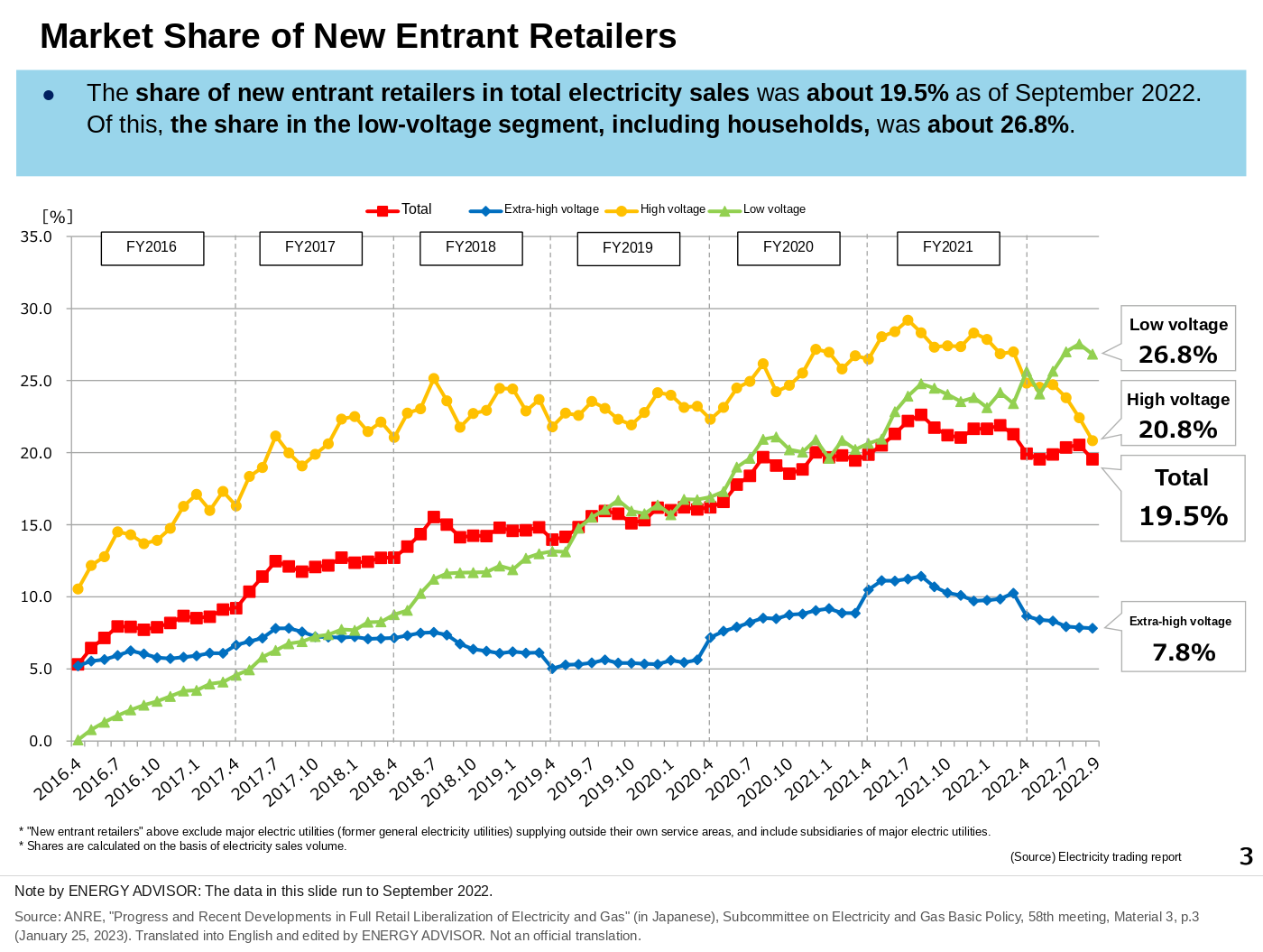
Sales volumes from the incumbents’ power plants fell. As a result, they responded by selling a larger share to the wholesale market and by retiring aging thermal plants whose profitability had worsened.
Lower market prices from expanding renewables
On July 1, 2012, the Feed-in Tariff (FIT) scheme started. Under it, electricity is purchased for a fixed period at prices set by the government.
Because the purchase prices were set very high, solar power expanded rapidly.
Most of the purchased solar power is bid into the JEPX day-ahead market.
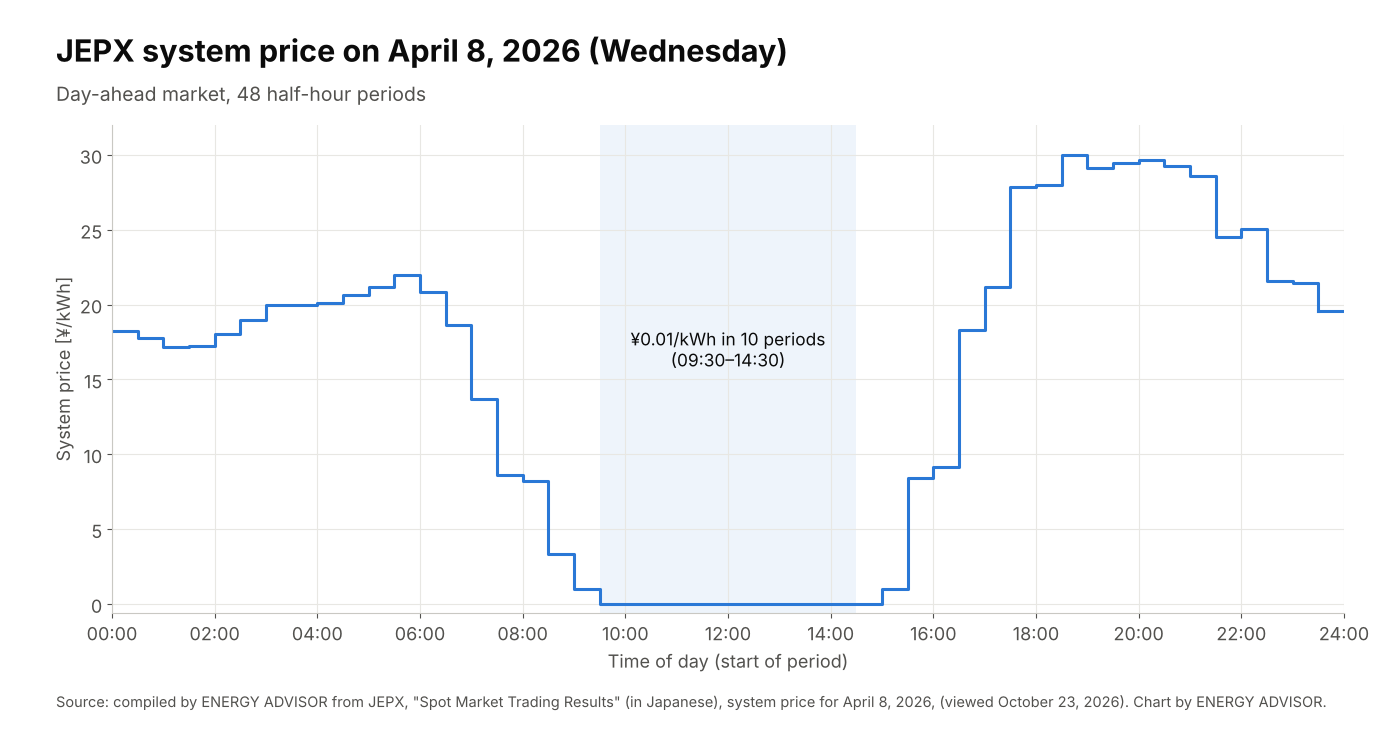
Solar power generates from sunlight and has zero fuel cost, so it is offered on the JEPX day-ahead market at the minimum price of ¥0.01/kWh.
As a result, during sunny daytime hours, solar power has pushed JEPX day-ahead prices down markedly.
Less predictable returns on generation investment
With full retail liberalization, generation investment by power generation companies was expected to shift to a model in which it is recovered with market prices as the benchmark.
If expanding renewables (FIT) lower market prices, generators’ sales revenue falls, and their willingness to make new generation investments at the right time may weaken.
Before liberalization, investment was recovered under cost-of-service regulation (a method of setting regulated tariffs by adding a reasonable profit to costs). Compared with that period, there was concern that the predictability of investment recovery (the degree to which future revenue can be foreseen) would decline.
Concerns about shortages of supply capacity and balancing capacity
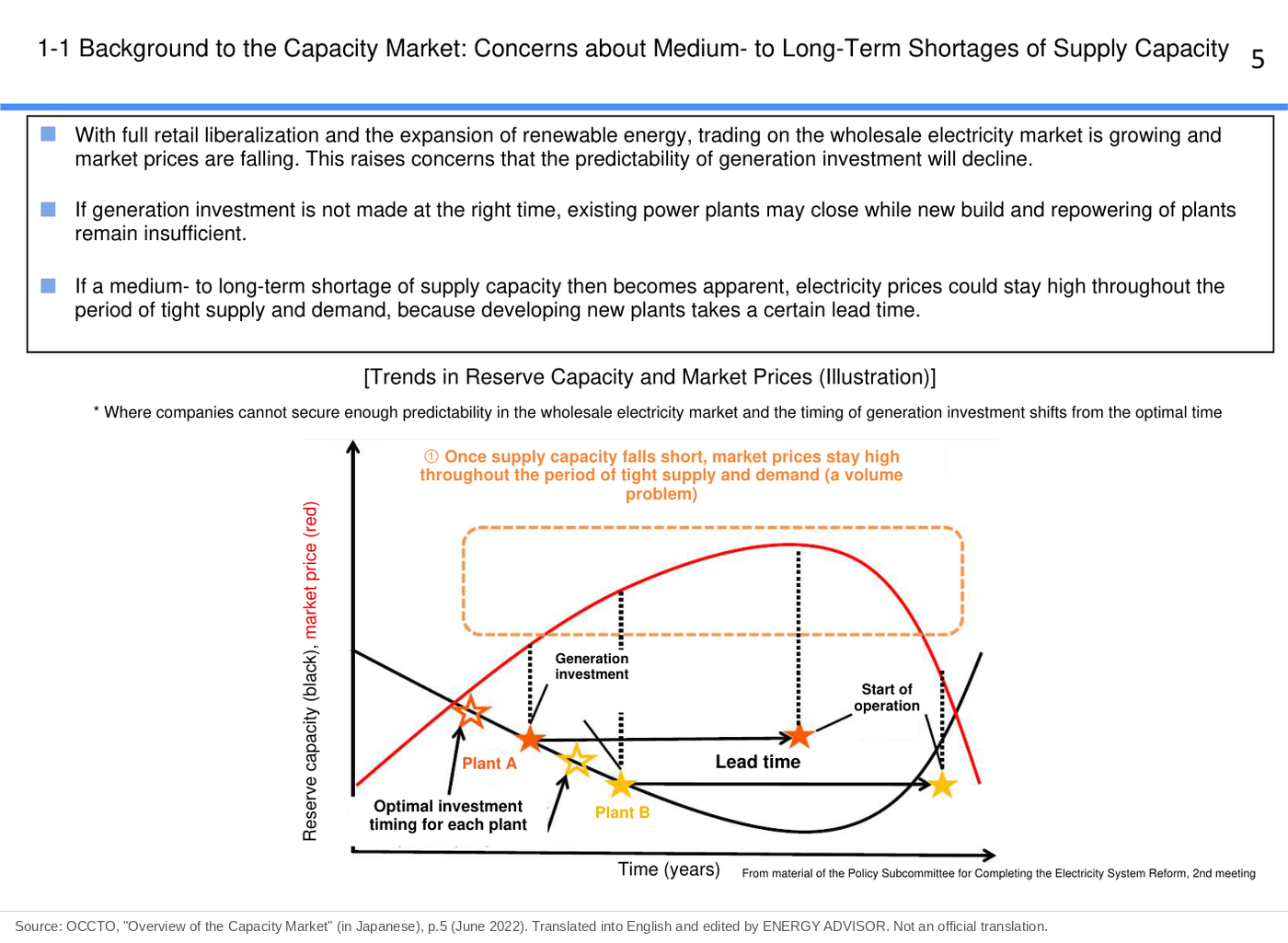
Full retail liberalization lowered the incumbents’ market share, and the expansion of renewables (FIT) lowered market prices. For these reasons, it was expected that the incumbents’ aging thermal plants with low cost competitiveness would be retired.
However, with less predictable returns on generation investment, new investment might not start until after aging thermal plants were retired and market price increases due to a supply shortage became apparent.
Developing a power plant takes a certain lead time. If investment starts only after such a situation arises, supply capacity could be short over the medium to long term, and market prices could stay high.
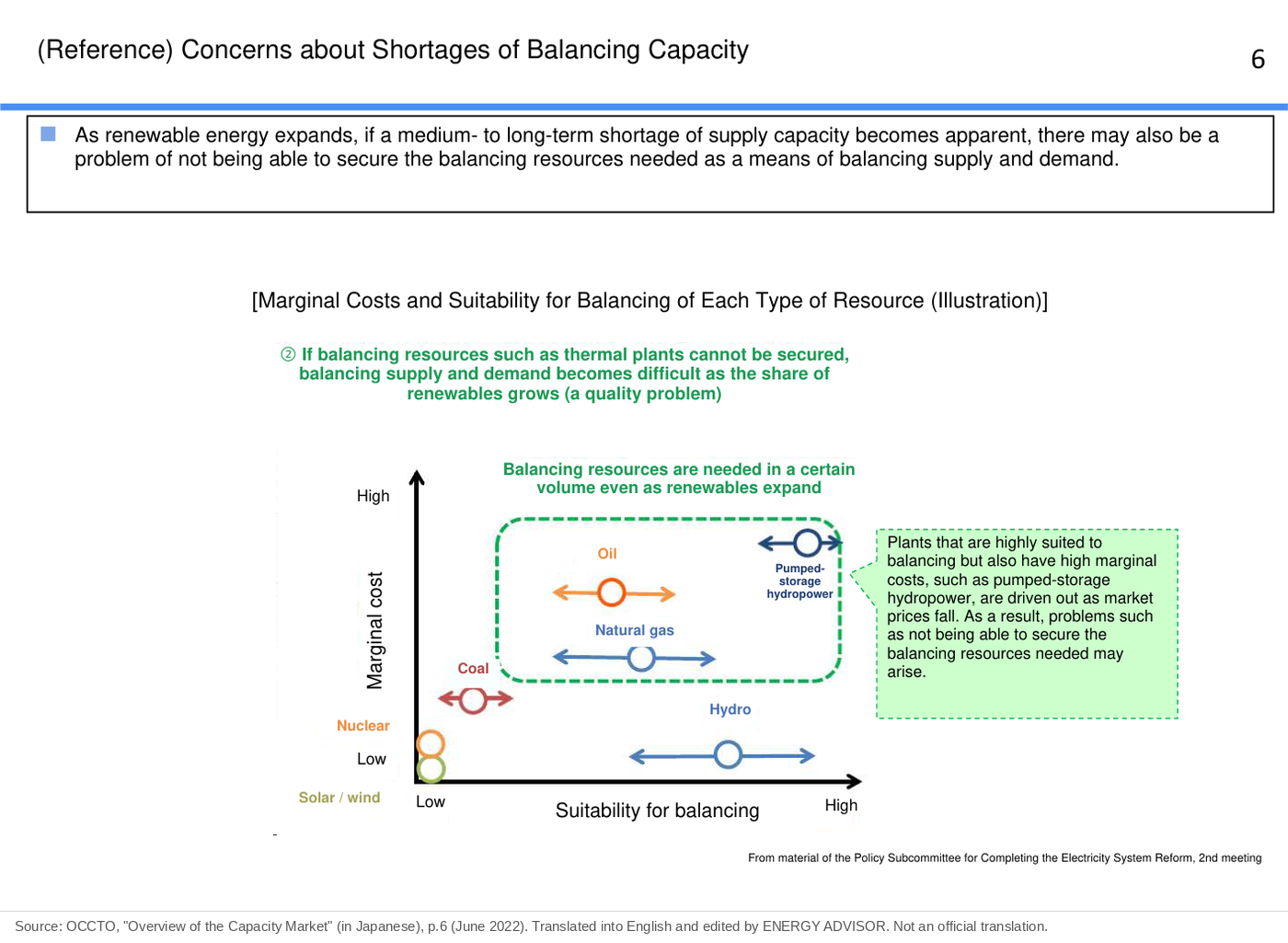
Renewable energy is being expanded. If a medium- to long-term shortage of supply capacity emerges in that context, it was also thought that dispatchable resources could not be secured. Dispatchable resources are those that raise and lower output to match supply and demand.
How the design was developed
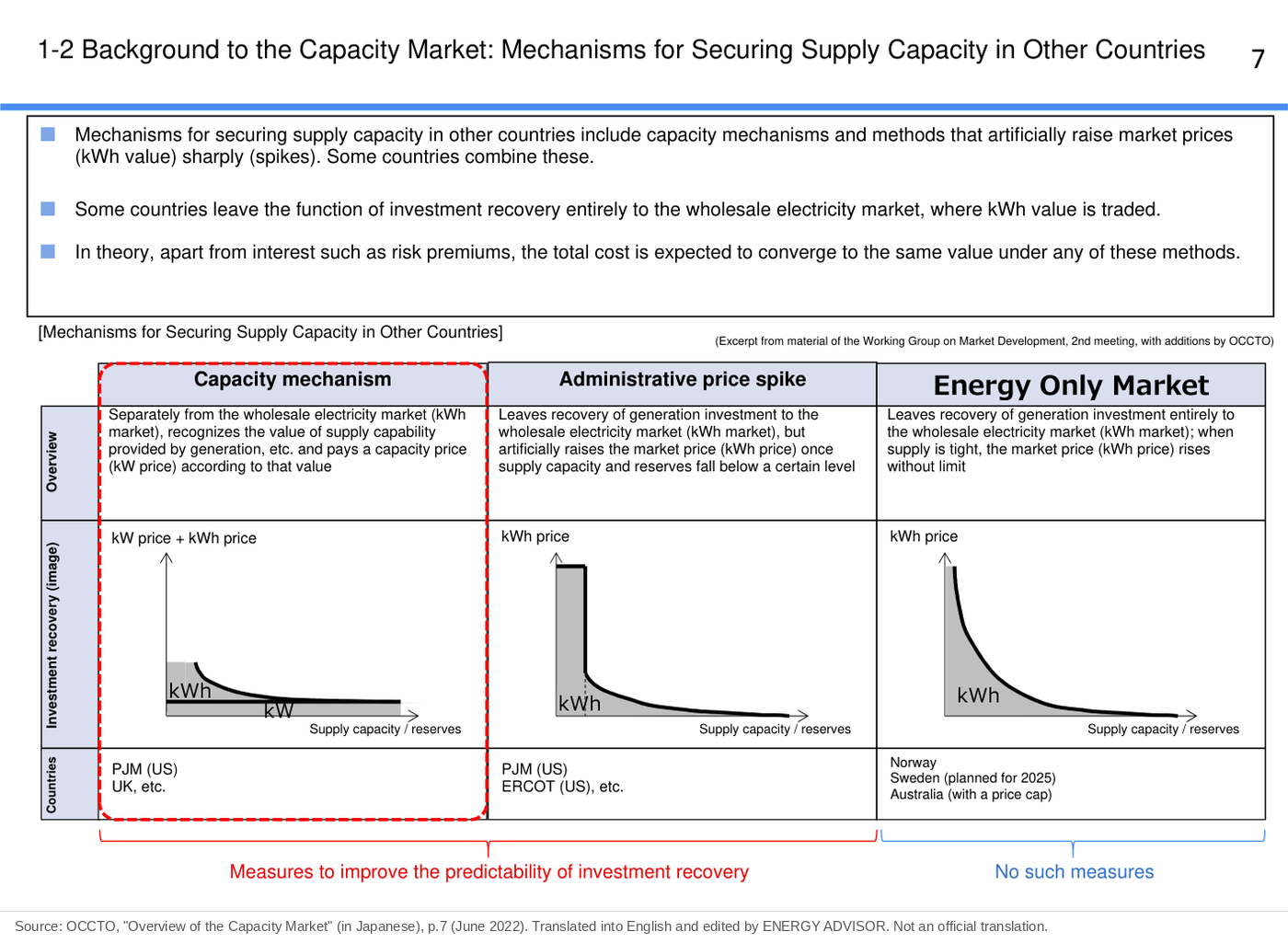
Against this background, the interim report of the Policy Subcommittee for Completing the Electricity System Reform (February 2017) set out the introduction of a capacity mechanism. It is a measure to secure a degree of predictability of investment recovery. A capacity mechanism is a general term for systems that pay for the ability to generate (kW), separately from the electricity generated (kWh).
Following this, from March 2017, the design of the capacity market was developed at OCCTO’s Study Session on the Capacity Market. To secure future supply capacity reliably, the “capacity market” was to be opened in FY2020.
Purpose of the Capacity Market
The capacity market has the following two purposes. OCCTO’s clearing results materials state the same purposes (clearing results for delivery year FY2029, PDF p.3).
- To ensure that generation investment is made at the right time and that the necessary supply capacity is reliably secured in advance
- To stabilize wholesale electricity market prices, enabling electricity businesses to operate stably, and to benefit customers through more stable electricity rates
Reliably securing supply capacity
The Electricity Supply Plan compiles the plans of generation, retail and GT&D companies. In the Electricity Supply Plan, the reserve margin (the margin of supply capacity over demand, as a ratio) of many areas was on a declining trend. A mechanism to reliably secure future supply capacity was therefore considered necessary.
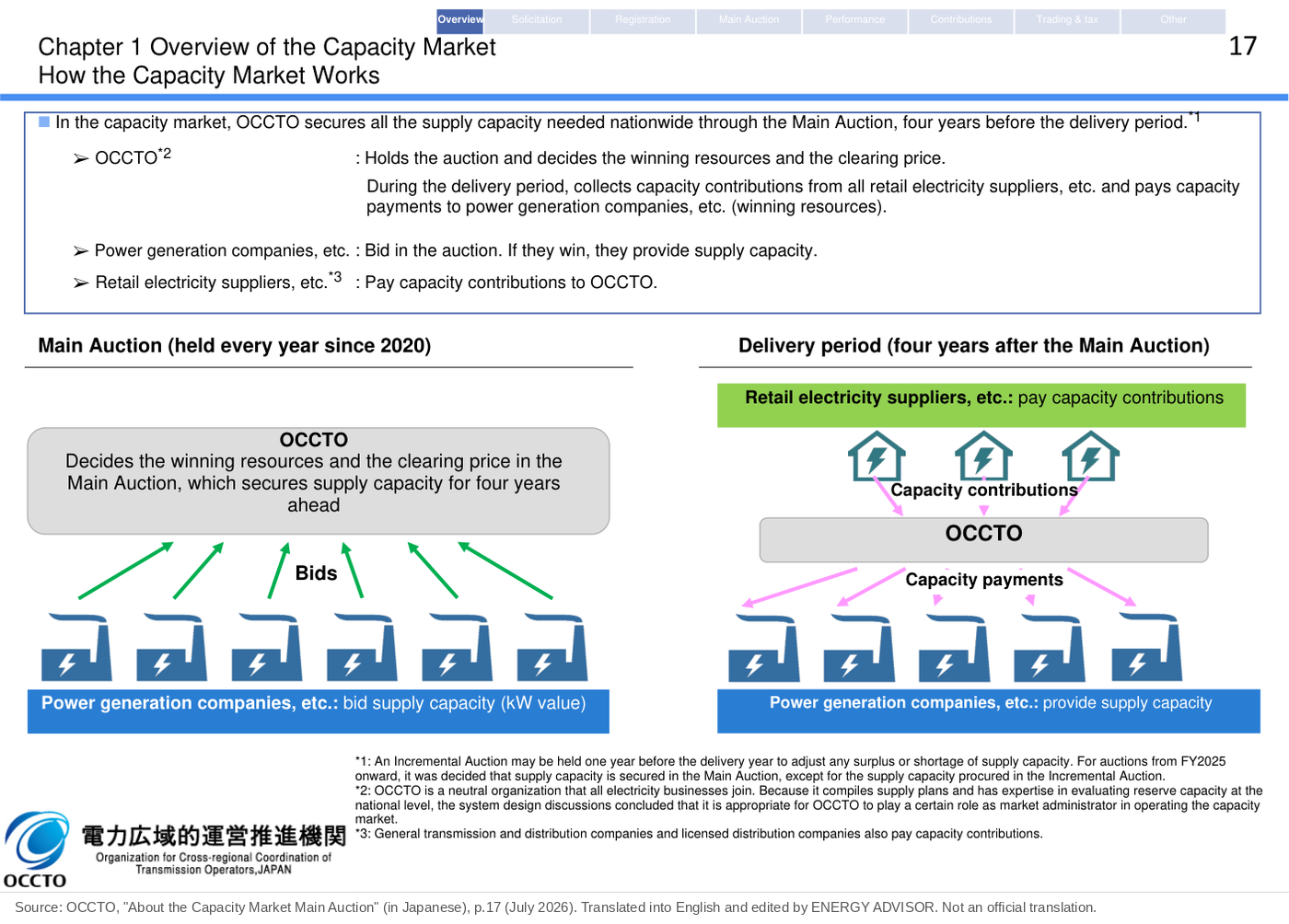
Through the capacity market, OCCTO secures the supply capacity (kW) needed nationwide all at once, four years before the delivery period (the fiscal year in which supply capacity is actually provided).
The capacity market is an auction in which OCCTO is the buyer and power generation companies and others are the sellers. The clearing price is determined from the necessary supply capacity set by OCCTO and the bid prices of the generators.
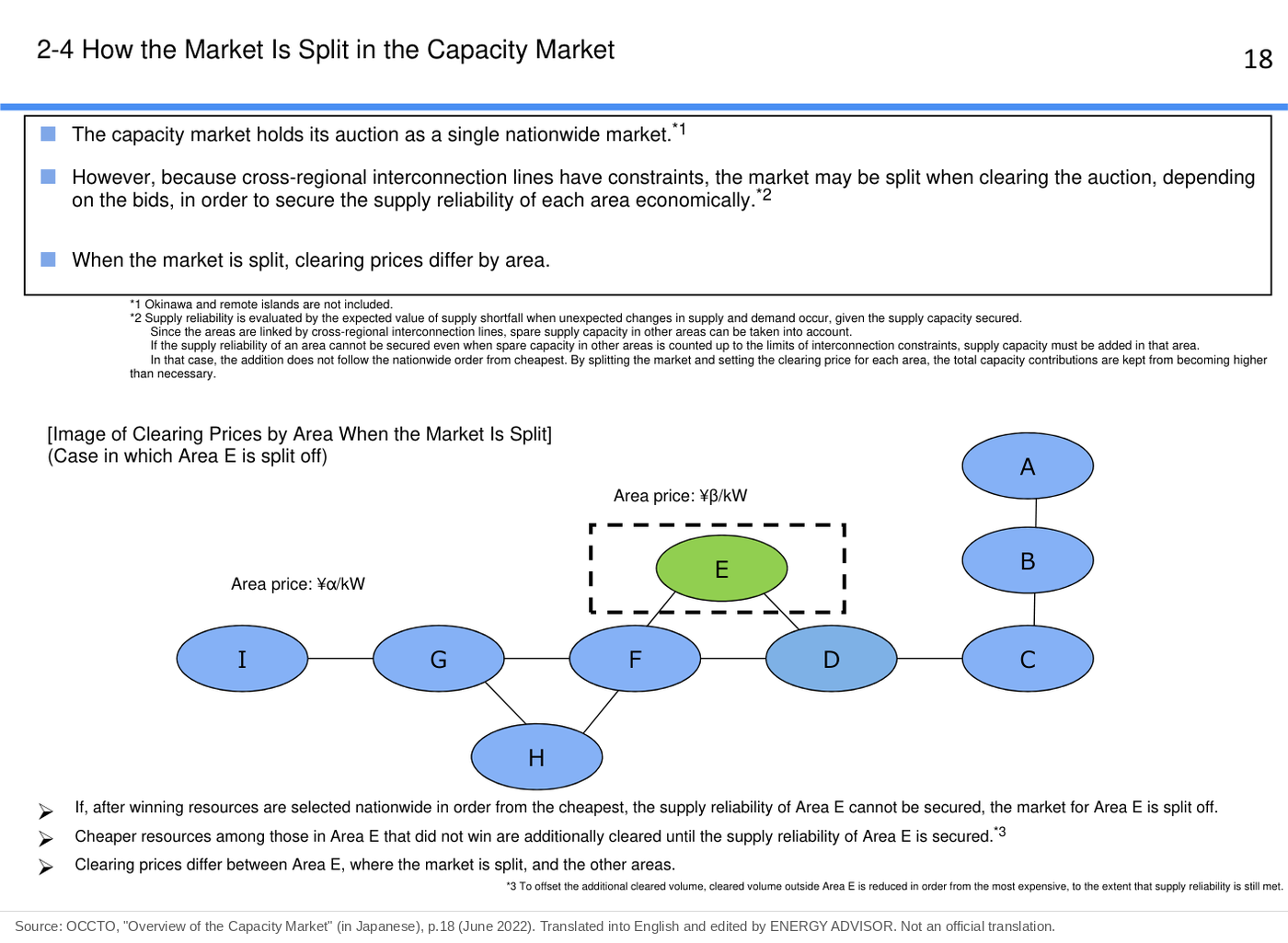
In principle, the clearing price is determined by single pricing, in which the same price applies to all winning resources. However, for delivery years FY2026–FY2029, there was a mechanism that applied pay-as-bid (multi-price) pricing in some areas. Under it, only resources that bid more than 1.5 times the price of the adjacent area cleared at their own bid prices. It was actually applied for delivery years FY2026–FY2028 (clearing results for delivery year FY2029, PDF pp.8–9).
For delivery year FY2030 (auction held in FY2026), this multi-price measure has been removed, and the auction clears at a single price. The treatment when the clearing price exceeds the indicative price was also decided. The indicative price is a benchmark price calculated from the cost of a new power plant. In this case, the clearing price for resources that bid at or below the indicative price becomes the indicative price (Main Auction Guidelines for delivery year FY2030, PDF p.33, July 30, 2026). The details of the mechanism are explained in the third article of this series.
In this way, the capacity market is a mechanism for reliably securing supply capacity by securing future generating ability (kW) in advance through an auction.
Stabilizing market prices
JEPX day-ahead prices have experienced several price spikes caused by supply shortages.
The day-ahead market also clears at a single price. Therefore, when sell bids are exhausted, the clearing price is set by the price of demand-side bids. There have been cases of very high clearing prices. In the winter of FY2020, the supply-demand balance became tight, and on January 15, 2021, the highest price for a 30-minute period (the unit in which trading is divided every 30 minutes) reached ¥251.0/kWh (Subcommittee on Electricity and Gas Basic Policy, 34th meeting, Material 9, p.16, April 28, 2021).
The aim is to resolve supply shortages through the capacity market, thereby preventing price spikes caused by sell bids being exhausted, and to stabilize market prices.
Start of Delivery and Clearing Prices So Far
The first auction of the capacity market was held in FY2020 and secured supply capacity for delivery year FY2024. Delivery under the capacity market began in April 2024, and as of October 2026 it is in its third year (timeline in Study Committee on the Capacity Market, 60th meeting, Material 5, PDF p.6).
Six Main Auctions (the main auction held four years ahead) have been held so far. The clearing price is set for each area (the area price) and has varied widely from auction to auction.
| Delivery year | Clearing price (area price, ¥/kW) | Total clearing amount (after transitional measures) |
|---|---|---|
| FY2024 | Nationwide 14,137 | ¥1,598.7 billion |
| FY2025 | Hokkaido and Kyushu 5,242 / others 3,495 | ¥514.0 billion |
| FY2026 | 5,832–8,749 | ¥842.5 billion |
| FY2027 | 7,638–13,287 | ¥1,314.0 billion |
| FY2028 | 8,785–14,812 | ¥1,850.6 billion |
| FY2029 | 12,388–15,112 | ¥2,209.4 billion |
(Sources: for FY2024 and FY2025, Study Committee on the Capacity Market, 35th meeting, Material 3-2, PDF pp.2–3; for FY2026 onward, OCCTO’s clearing results and review reports for each year. The transitional measures reduce payments to older plants to soften the impact of the new market. Details and sources are in the third article of this series.)
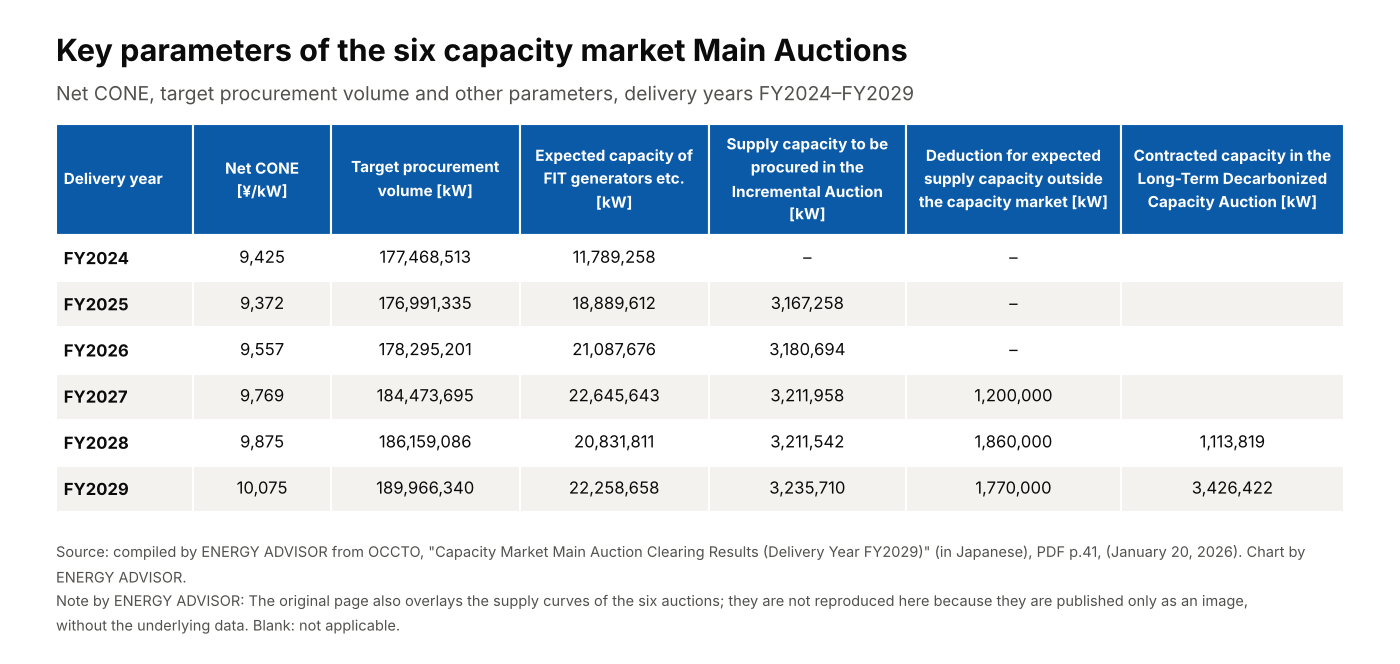
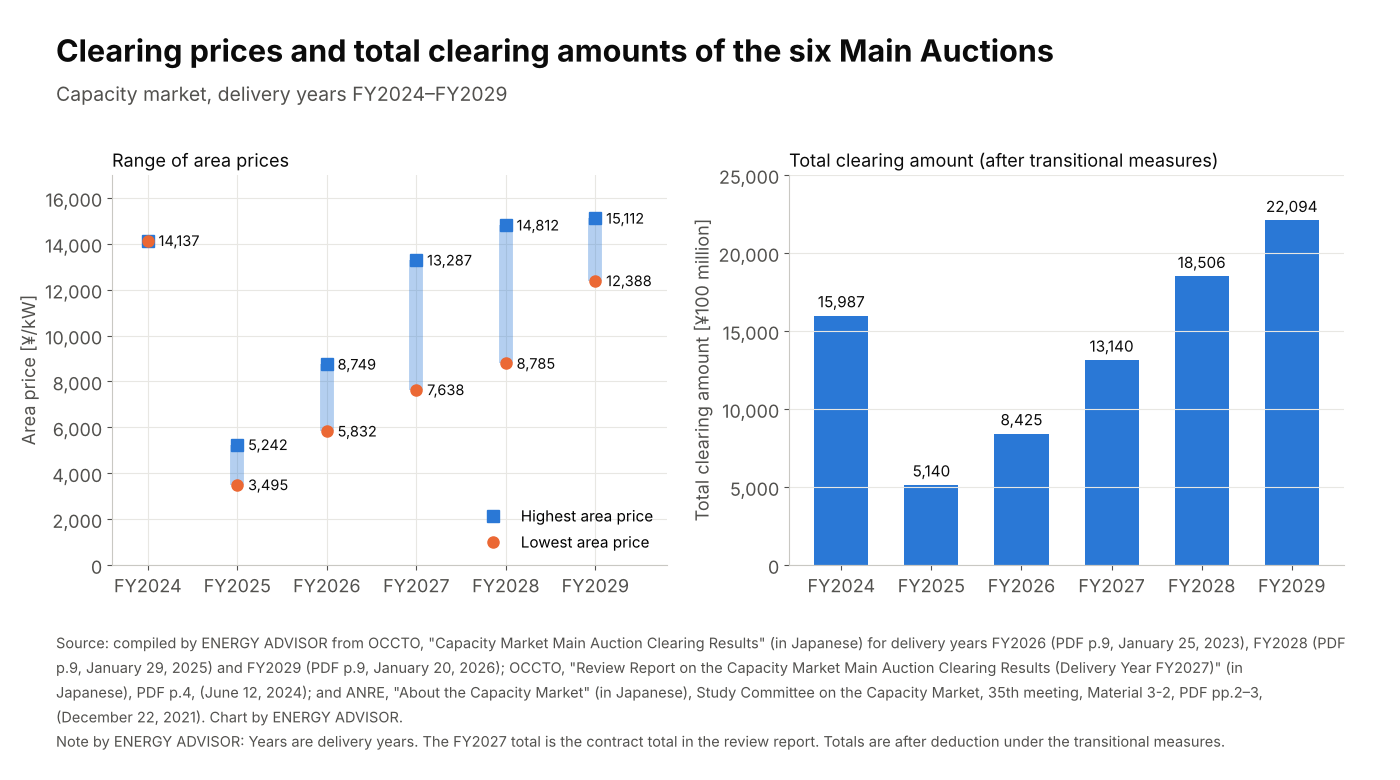
Clearing prices were lowest for delivery year FY2025 and have risen ever since. The total clearing amount for delivery year FY2029 is ¥2.2094 trillion, more than double that for FY2026.
In FY2025, a “comprehensive review” of the capacity market (an inspection of the whole system) was carried out. In its draft review report, OCCTO assessed “stabilization of wholesale electricity market prices” as follows (Study Committee on the Capacity Market, 72nd meeting, Attachment 1, “Capacity Market FY2025 Comprehensive Review: Review Report (Draft)”, PDF p.19, March 27, 2026).
- For delivery years FY2024–FY2029, supply capacity at or above the target procurement volume was procured, and wholesale market prices have not stayed high since FY2024. The market is therefore “considered to have contributed to a certain extent” to price stabilization.
- However, price spikes during tight supply-demand conditions involve overlapping factors such as severe weather and declining fuel inventories, so it is “difficult to evaluate quantitatively” the effect of the capacity market separately.
- At the time of the report, delivery was in its second year, so evaluation and study will continue.
A Separate Mechanism to Encourage New Investment
The Main Auction of the capacity market secures supply capacity for “one year,” four years ahead. For this reason, it was concluded that most winning resources are existing plants and that the Main Auction is not sufficient to support investment decisions for new plants that require huge upfront investment.
So, as part of the capacity market, the Long-Term Decarbonized Capacity Auction started in FY2023. It covers new build and repowering (rebuilding) of decarbonized power sources (such as sources that emit no CO2 when generating). It promises capacity revenue at the level of fixed costs, in principle for 20 years (OCCTO, “Overview of the Long-Term Decarbonized Capacity Auction (Bidding Year FY2026)”, July 2026, PDF pp.10–11). The background and results are explained in the seventh to ninth articles of this series.
Summary
- The capacity market secures future supply capacity (kW) all at once, four years before delivery. OCCTO opened it in FY2020.
- The background was the fall in market prices due to full retail liberalization and the expansion of renewables (FIT). The predictability of returns on generation investment fell, and there was concern that investment in new plants would lag behind the retirement of aging thermal plants.
- Its purposes are to reliably secure the necessary supply capacity and to stabilize wholesale electricity market prices.
- Delivery began in FY2024. Clearing prices bottomed at ¥3,495/kW (outside Hokkaido and Kyushu) for delivery year FY2025 and then rose, reaching ¥12,388–15,112/kW for FY2029.
- To encourage investment in new decarbonized power sources, the Long-Term Decarbonized Capacity Auction has been held separately since FY2023.
This article is based on published materials from the Ministry of Economy, Trade and Industry and its Agency for Natural Resources and Energy, the Electricity and Gas Market Surveillance Commission, the Organization for Cross-regional Coordination of Transmission Operators (OCCTO) and other sources. The English translations of figures are by ENERGY ADVISOR and are not official translations. When using this information for decisions, please check the original sources. When we find an error, we correct the article and note the date of the correction.
Sources
- OCCTO, “Capacity Market Main Auction Clearing Results (Delivery Year FY2029)” (in Japanese), PDF p.3 (purposes of the capacity market), p.9 (overview), January 20, 2026. https://www.occto.or.jp/assets/news/capacity-market/260120_mainauction_youryouyakujokekka_kouhyou_jitsujukyu2029.pdf
- OCCTO, “Capacity Market Main Auction Guidelines (Delivery Year FY2030)” (in Japanese), PDF p.33 (method of determining the clearing price), July 30, 2026. https://www.occto.or.jp/assets/market-board/market/jitsujukyukanren/260730_mainauction_boshuyoukou_jitsujukyu2030.pdf
- Study Committee on the Capacity Market, 35th meeting, Material 3-2, “About the Capacity Market” (ANRE) (in Japanese), PDF pp.2–3, December 22, 2021. https://www.occto.or.jp/assets/iinkai/youryou/kentoukai/2021/files/youryou_kentoukai_35_03_2.pdf
- OCCTO, “Capacity Market Main Auction Clearing Results (Delivery Year FY2026)” (in Japanese), PDF p.9, January 25, 2023. https://www.occto.or.jp/assets/market-board/market/oshirase/2022/files/230125_mainauction_youryouyakujokekka_kouhyou_jitsujukyu2026.pdf
- OCCTO, “Review Report on the Capacity Market Main Auction Clearing Results (Delivery Year FY2027)” (in Japanese), PDF p.4, June 12, 2024. https://www.occto.or.jp/assets/market-board/market/oshirase/2024/files/240612_mainauction_kensyoreport_jitsujukyu2027.pdf
- OCCTO, “Capacity Market Main Auction Clearing Results (Delivery Year FY2028)” (in Japanese), PDF p.9, January 29, 2025. https://www.occto.or.jp/assets/market-board/market/oshirase/2024/files/250129_mainauction_youryouyakujokekka_kouhyou_jitsujukyu2028.pdf
- Study Committee on the Capacity Market, 60th meeting, Material 5, “Response Following the Study on Supply Capacity Provision Notices” (in Japanese), PDF p.6, January 21, 2025. https://www.occto.or.jp/assets/iinkai/youryou/kentoukai/2024/files/youryou_kentoukai_60_05.pdf
- Study Committee on the Capacity Market, 71st meeting, Material 4, “FY2025 Comprehensive Review of the Capacity Market (Call for Evidence Results, Part 2)” (in Japanese), PDF p.4, January 30, 2026. https://www.occto.or.jp/assets/iinkai/youryou_kentoukai/71/youryou_kentoukai_71_04.pdf
- OCCTO, “Overview of the Long-Term Decarbonized Capacity Auction (Bidding Year FY2026)” (in Japanese), PDF pp.10–11, July 2026. https://www.occto.or.jp/assets/various/capacity-market/youryou_setsumeikai/202607_youryou_gaiyousetsumei_long-r.pdf
- Advisory Committee for Natural Resources and Energy, Electricity and Gas Industry Committee, Subcommittee on Electricity and Gas Basic Policy, 58th meeting, Material 3 (in Japanese) (source of a figure in the original article). https://www.meti.go.jp/shingikai/enecho/denryoku_gas/denryoku_gas/pdf/058_03_00.pdf
- Policy Subcommittee for Completing the Electricity System Reform, Interim Report (in Japanese), February 2017. https://www.meti.go.jp/shingikai/enecho/kihon_seisaku/denryoku_kaikaku/20170209_report.html
- OCCTO, Study Session on the Capacity Market (in Japanese). https://www.occto.or.jp/iinkai/youryou_benkyoukai/1.html
- Advisory Committee for Natural Resources and Energy, Electricity and Gas Industry Committee, Subcommittee on Electricity and Gas Basic Policy, 34th meeting, Material 9, “Review of the Tight Supply-Demand Balance and Market Price Spike in Winter FY2020: Interim Summary (Draft)” (in Japanese), p.16, April 28, 2021. https://www.meti.go.jp/shingikai/enecho/denryoku_gas/denryoku_gas/pdf/034_09_00.pdf
- Study Committee on the Capacity Market, 72nd meeting, Attachment 1, “Capacity Market FY2025 Comprehensive Review: Review Report (Draft)” (in Japanese), PDF pp.18–19 (effects on wholesale electricity market prices, etc.), March 27, 2026. https://www.occto.or.jp/assets/iinkai/youryou_kentoukai/72/youryou_kentoukai_72_besshi01.pdf
- OCCTO, “Overview of the Capacity Market” (briefing material) (in Japanese), PDF pp.5–7, pp.10–11, June 2022. https://www.occto.or.jp/assets/market-board/market/files/202206_youryou_gaiyousetsumei.pdf