GX-ETS and Non-Fossil Certificates– category –
How the GX Emissions Trading System (GX-ETS), which started in FY2026, works and how its prices are set, and the types, markets and prices of non-fossil certificates.
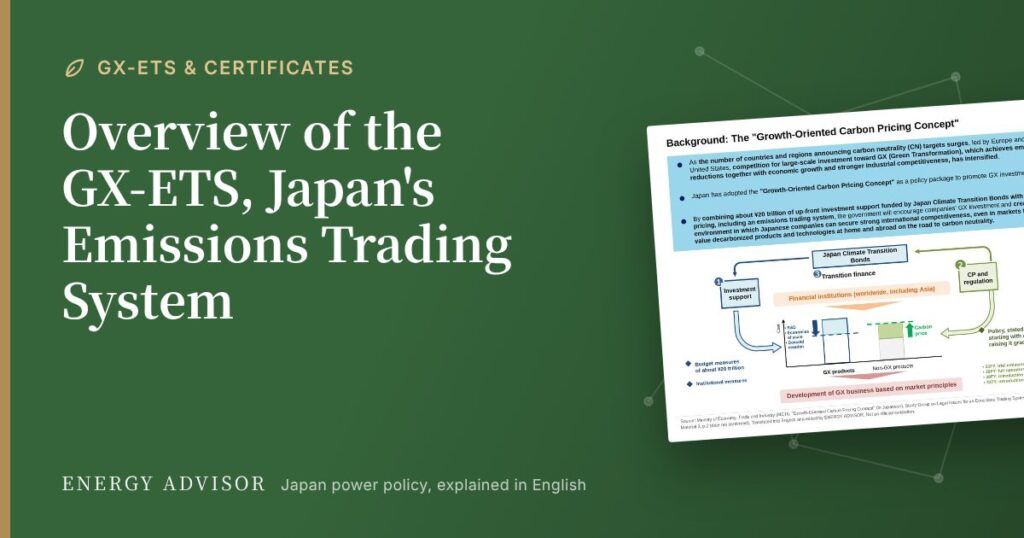
Overview of the GX-ETS, Japan’s Emissions Trading System
Japan’s GX-ETS became mandatory in April 2026 for companies emitting 100,000 t-CO2 or more a year. Its three phases, allowances, prices and duties.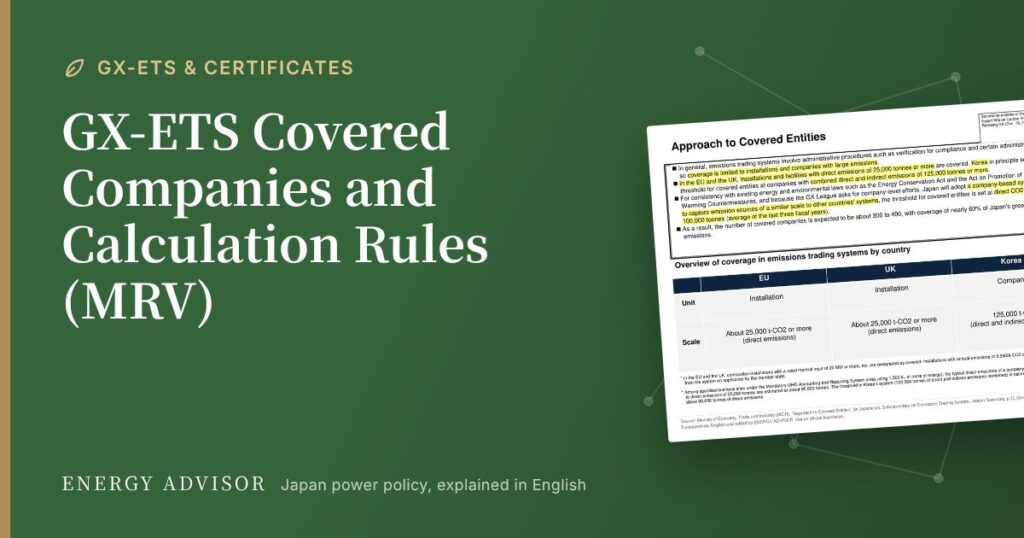
GX-ETS Covered Companies and Calculation Rules (MRV)
Which companies Japan’s GX-ETS covers (Scope 1 of 100,000 t-CO2 or more) and its MRV rules: reporting, staged verification and non-compliance charges.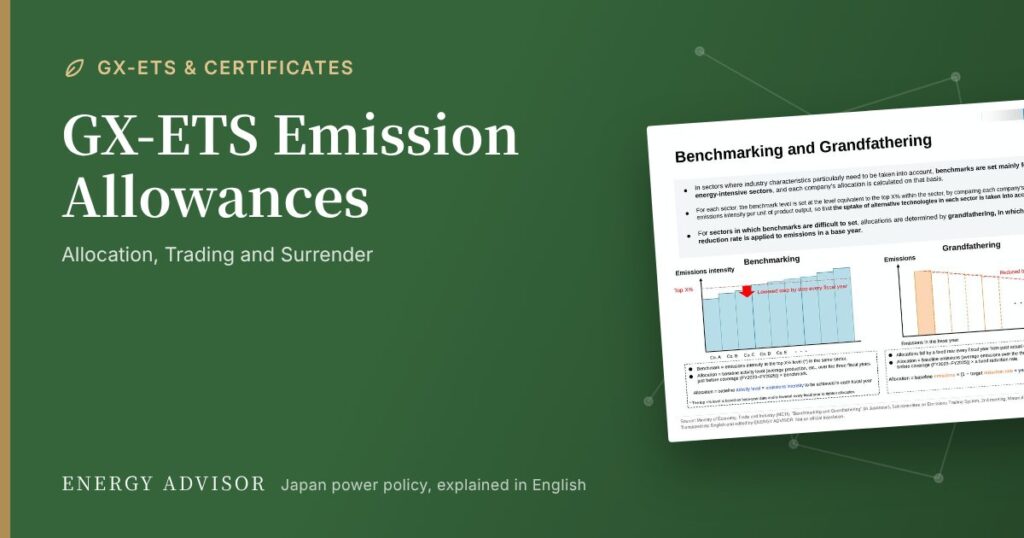
GX-ETS Emission Allowances: Allocation, Trading and Surrender
How GX-ETS allowances work: benchmarking and grandfathering, market trading, surrender by January 31, banking and price stabilization.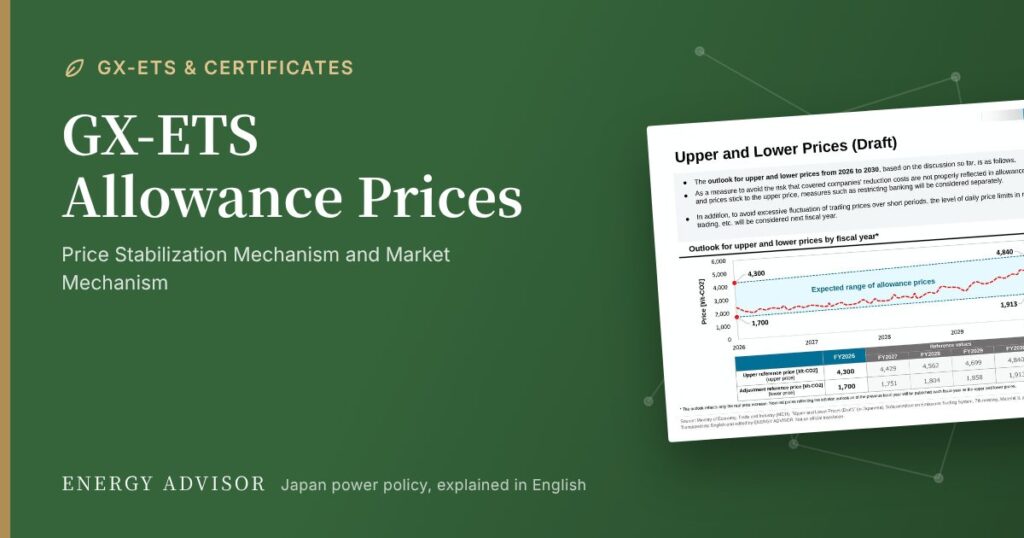
GX-ETS Allowance Prices: Price Stabilization Mechanism and Market Mechanism
GX-ETS prices for FY2026 (¥4,300 cap, ¥1,700 floor per t-CO2), how the price collar works, the annual increase to FY2030, and effects on companies.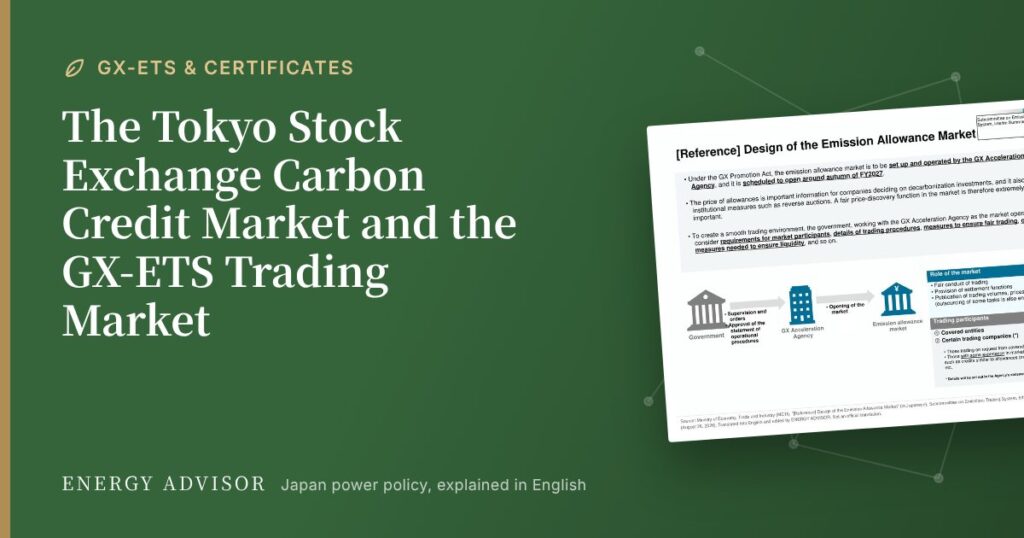
The Tokyo Stock Exchange Carbon Credit Market and the GX-ETS Trading Market
Japan’s two carbon markets: the TSE Carbon Credit Market for J-Credits (opened 2023) and the GX-ETS allowance market due around autumn of FY2027.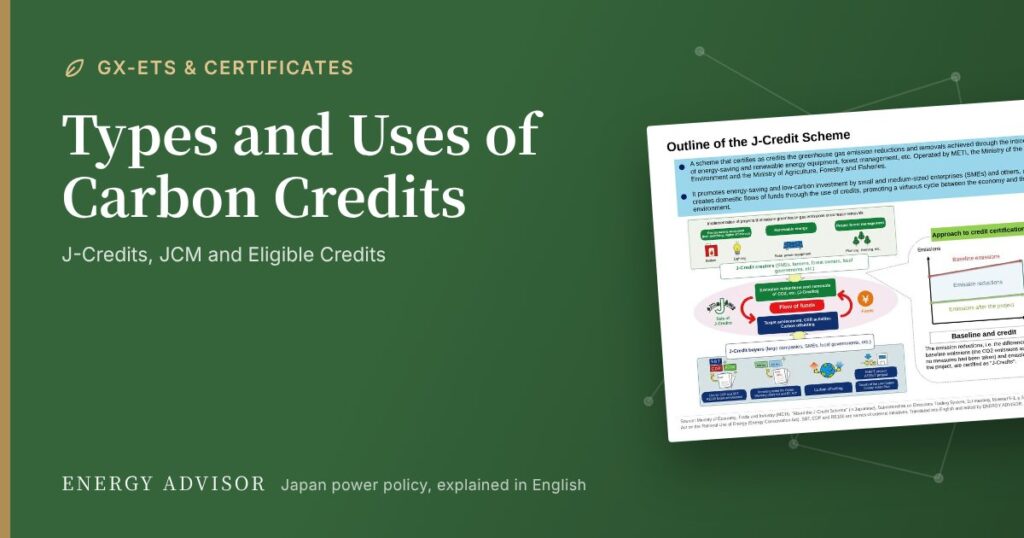
Types and Uses of Carbon Credits: J-Credits, JCM and Eligible Credits
Carbon credits in Japan: the J-Credit Scheme, the Joint Crediting Mechanism (JCM), and the GX-ETS rule allowing credits for up to 10% of emissions.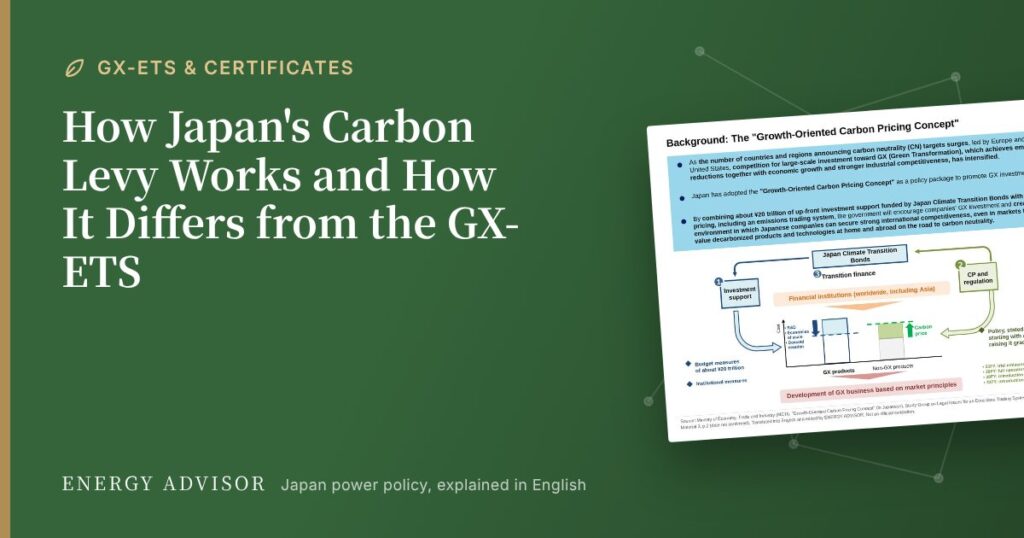
How Japan’s Carbon Levy Works and How It Differs from the GX-ETS
Japan’s fossil fuel levy (carbon levy), collected from fuel importers from FY2028, compared with the GX-ETS: coverage, mechanism and use of revenue.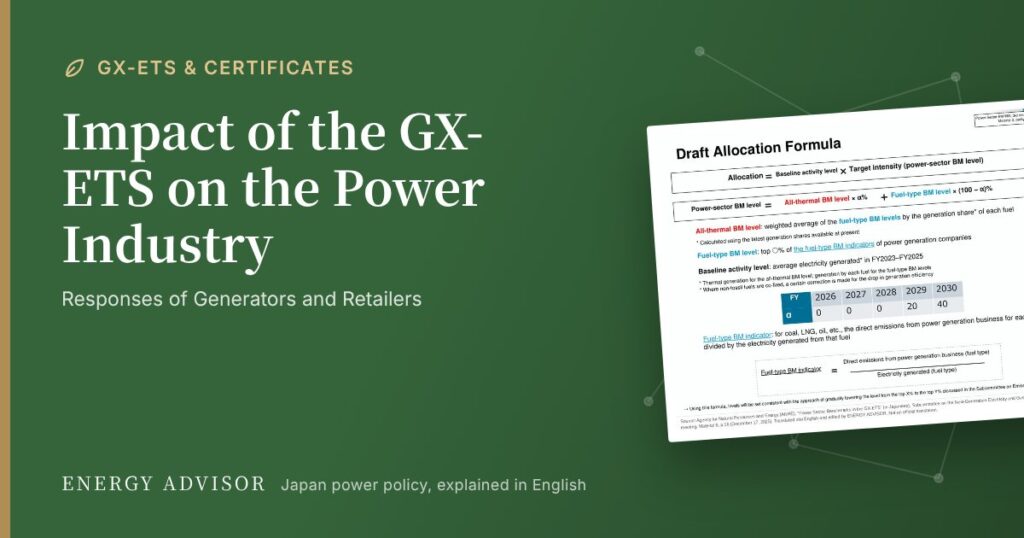
Impact of the GX-ETS on the Power Industry: Responses of Generators and Retailers
How the GX-ETS affects Japan’s generators and retail electricity suppliers: free allocation in Phase 2, paid auctions from FY2033, cost pass-through.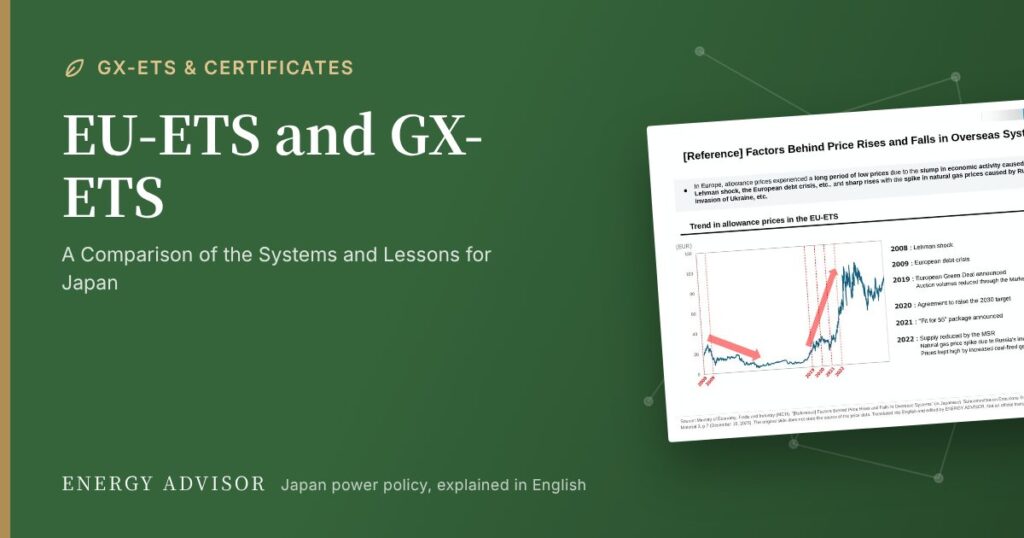
EU-ETS and GX-ETS: A Comparison of the Systems and Lessons for Japan
Japan’s GX-ETS compared with the EU-ETS: phases, free allocation, paid auctions, price stabilization, credit use, and what CBAM means for exporters.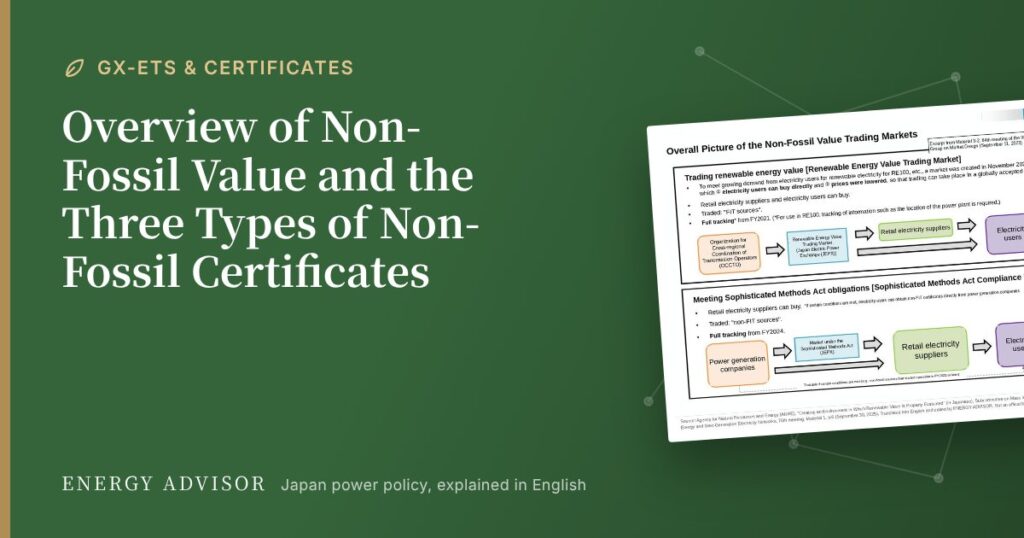
Overview of Non-Fossil Value and the Three Types of Non-Fossil Certificates
Non-fossil value in Japan, the three types of non-fossil certificates (FIT, non-FIT renewable-designated and non-designated) and their two markets.