High-Voltage Electricity Prices– category –
What makes up Japan's high-voltage (6.6 kV) electricity prices, fuel cost adjustment and market-linked prices, and how to compare quotations.
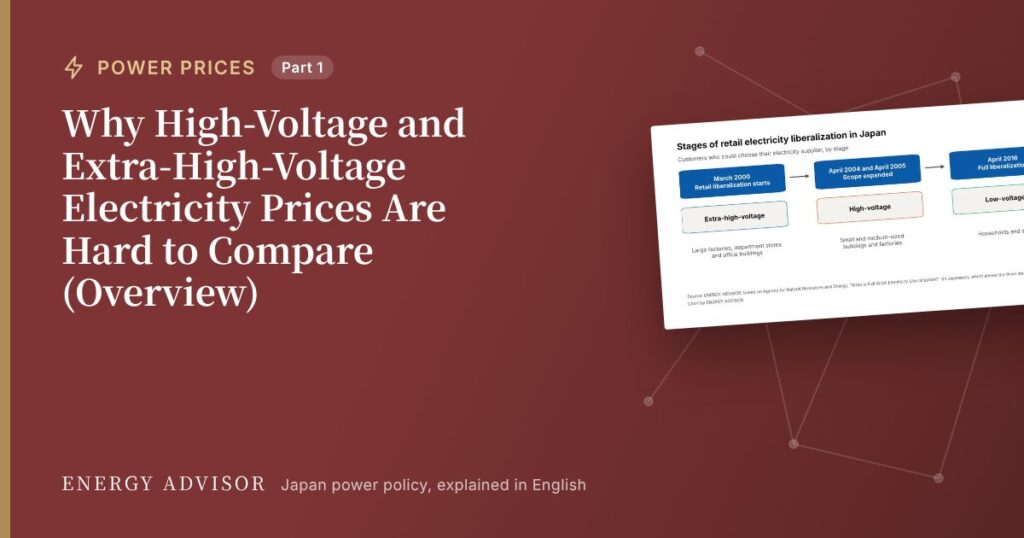
Part 1: Why High-Voltage and Extra-High-Voltage Electricity Prices Are Hard to Compare (Overview)
Why quotations for high-voltage electricity in Japan cannot be compared side by side, why the standard tariff is a key benchmark, and how to compare.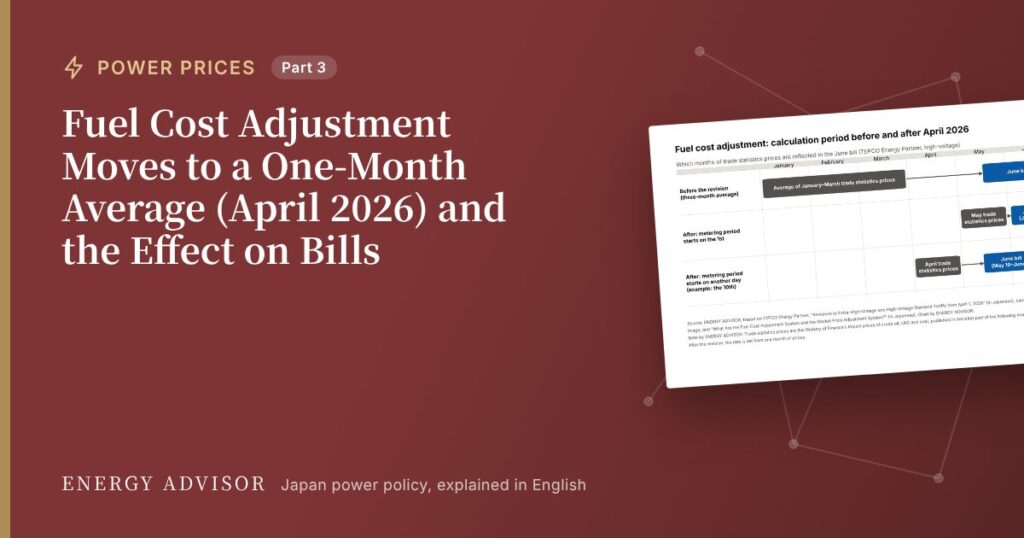
Part 3: Fuel Cost Adjustment Moves to a One-Month Average (April 2026) and the Effect on Bills
From April 2026, TEPCO Energy Partner’s high-voltage fuel cost adjustment uses a one-month average instead of three. What changed and how bills show it.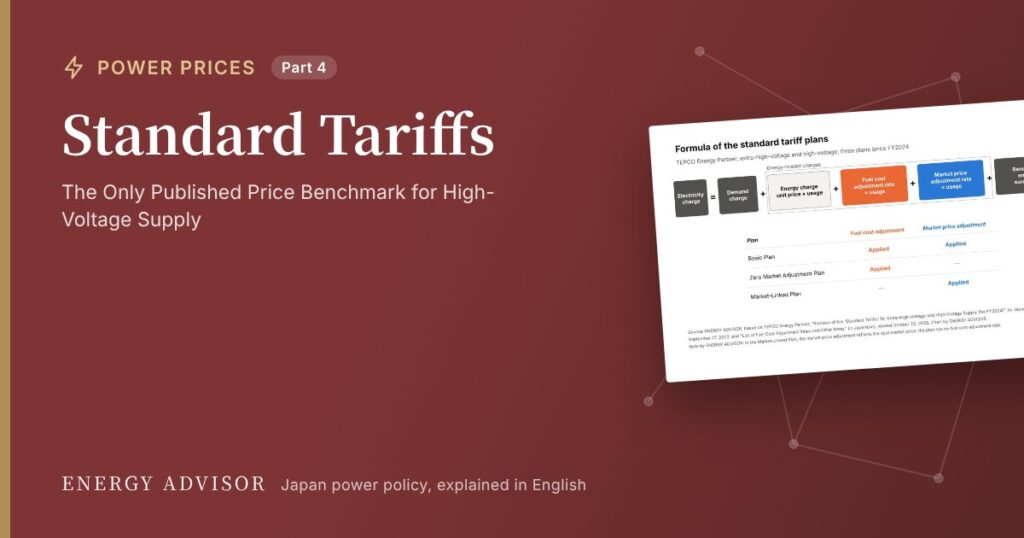
Part 4: Standard Tariffs: The Only Published Price Benchmark for High-Voltage Supply
What the standard tariffs of Japan’s incumbent regional utilities are, TEPCO Energy Partner’s three plans and 2026 rates, and why they are a benchmark.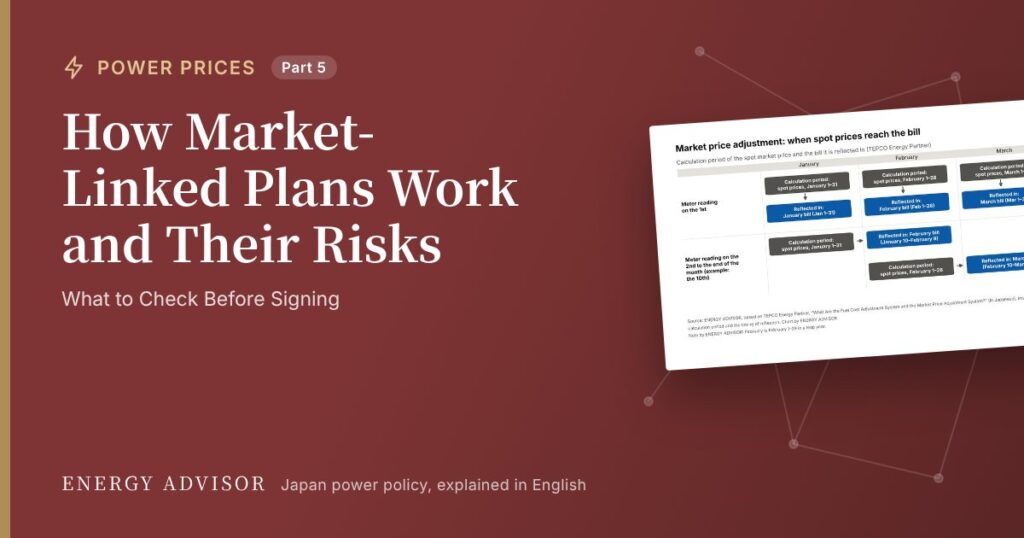
Part 5: How Market-Linked Plans Work and Their Risks: What to Check Before Signing
How market-linked high-voltage plans in Japan pass JEPX spot prices into bills, 2026 rates compared with the Basic Plan, and what to check first.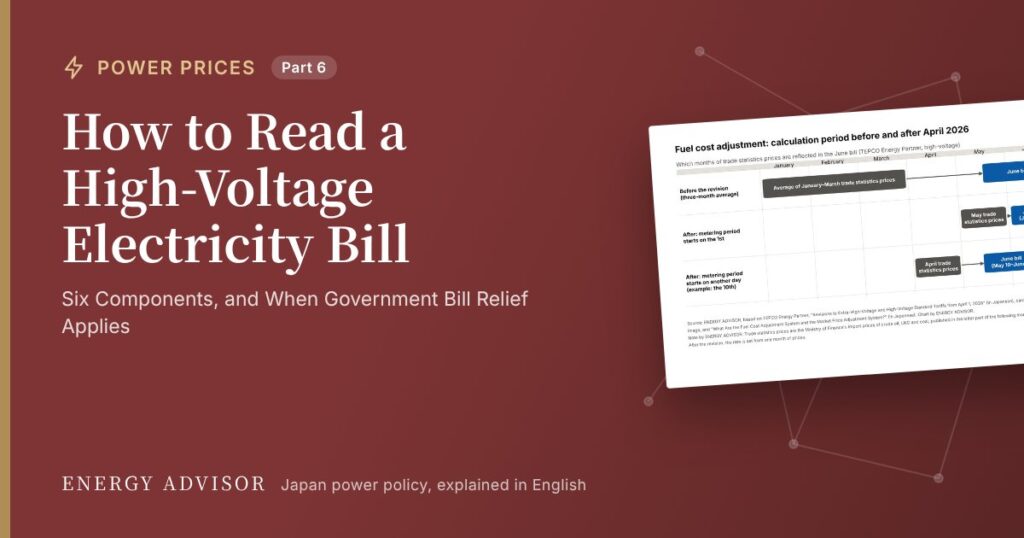
Part 6: How to Read a High-Voltage Electricity Bill: Six Components, and When Government Bill Relief Applies
The six components of a high-voltage electricity bill in Japan, and how the government bill relief for July–September 2026 usage appeared on bills.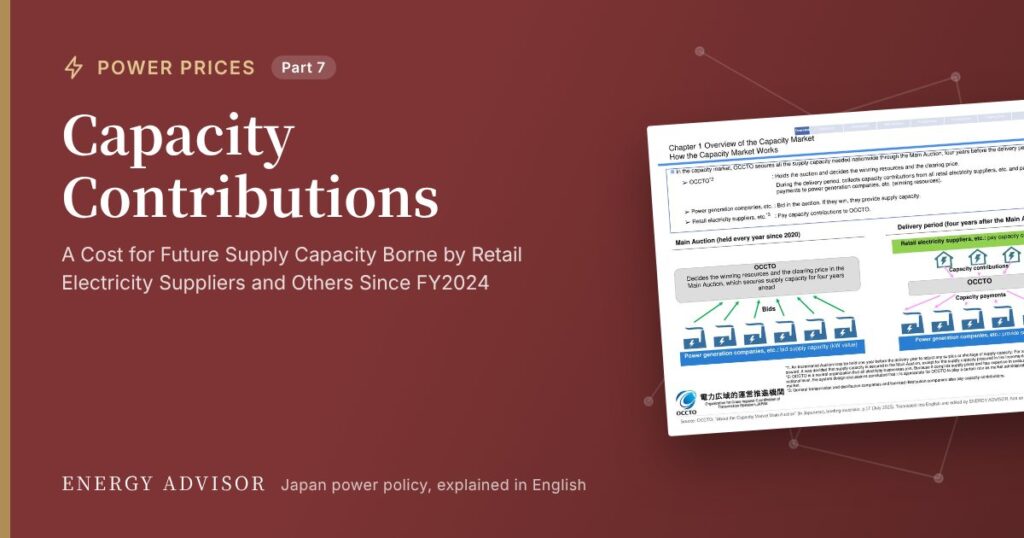
Part 7: Capacity Contributions: A Cost for Future Supply Capacity Borne by Retail Electricity Suppliers and Others Since FY2024
What Japan’s capacity contribution is, who pays it, and how OCCTO’s estimates rise from ¥842.5 billion (FY2026) to ¥2.2702 trillion (FY2029).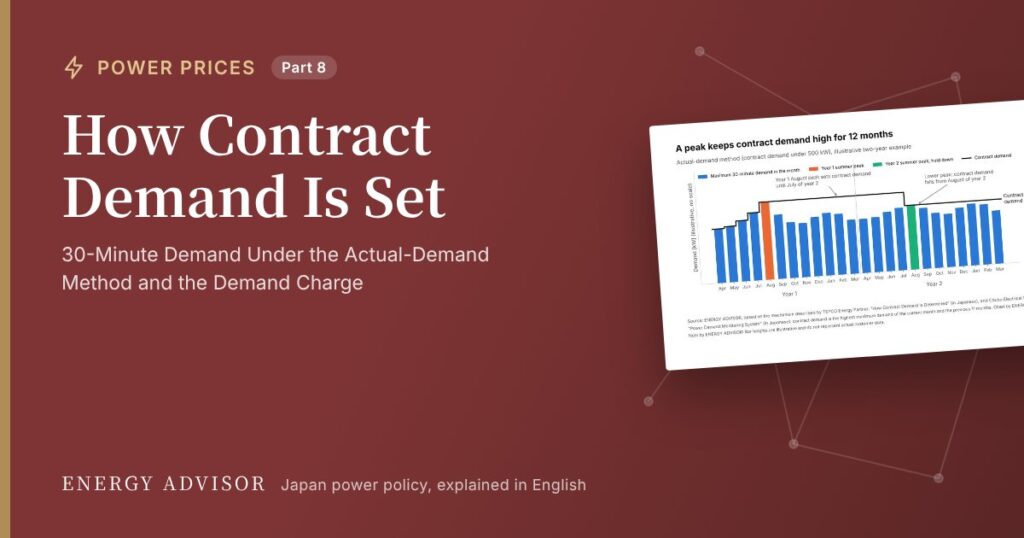
Part 8: How Contract Demand Is Set: 30-Minute Demand Under the Actual-Demand Method and the Demand Charge
How contract demand for high-voltage supply in Japan is set under the actual-demand method and negotiated contract demand, and how it drives the demand charge.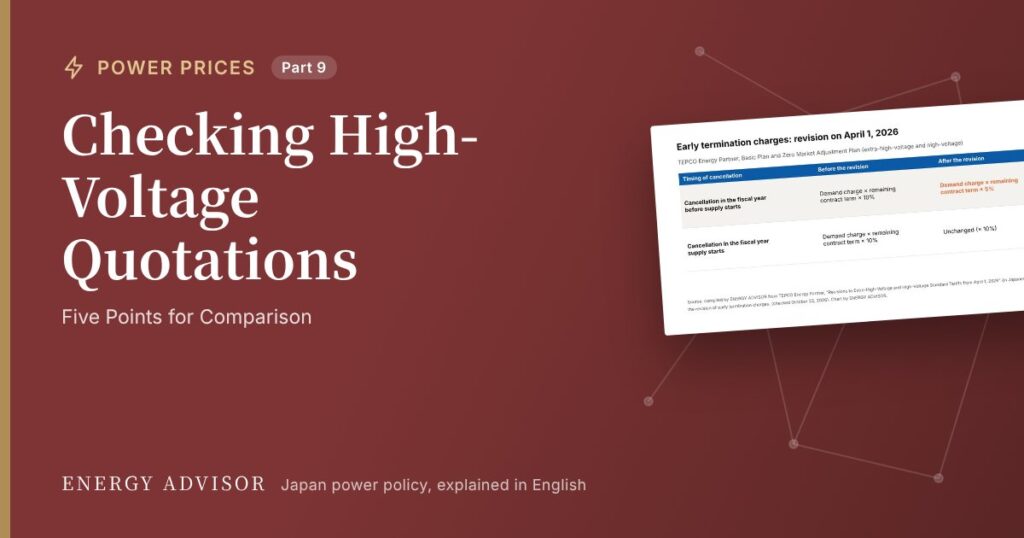
Part 9: Checking High-Voltage Quotations: Five Points for Comparison
Five points to check in quotations for high-voltage electricity in Japan, with example questions, where to look, and warning signs for each.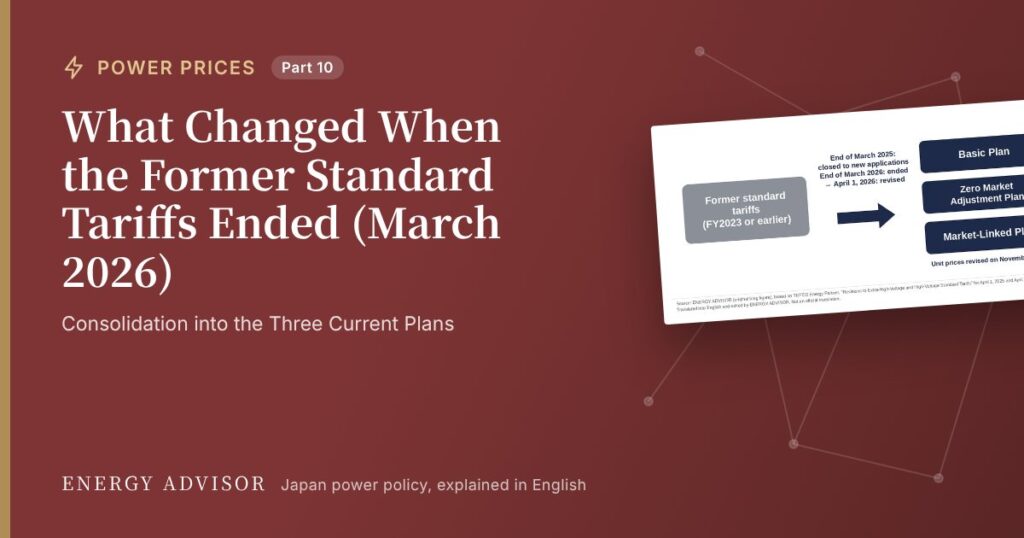
Part 10: What Changed When the Former Standard Tariffs Ended (March 2026): Consolidation into the Three Current Plans
TEPCO Energy Partner’s former standard tariffs ended in March 2026. What changed, the cap on new applications, and what contract holders should check.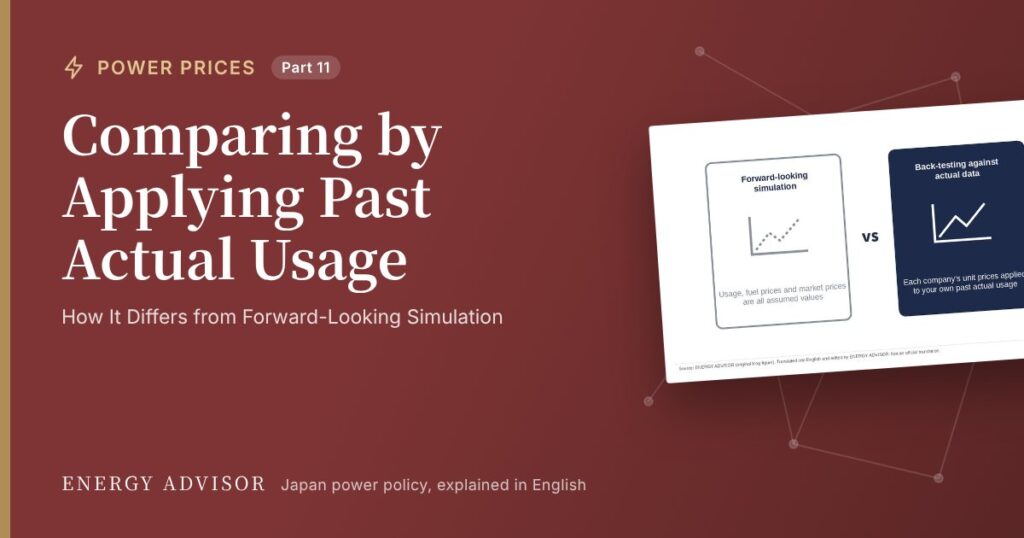
Part 11: Comparing by Applying Past Actual Usage: How It Differs from Forward-Looking Simulation
Why forward-looking simulations of electricity costs rarely hit the mark, and how back-testing past Januarys shows the cheapest plan changes by year.
12