Decarbonization for SMEs– category –
For small and medium-sized enterprises asked by customers to report CO2 emissions: how to count emissions, how to reduce them and what support is available.
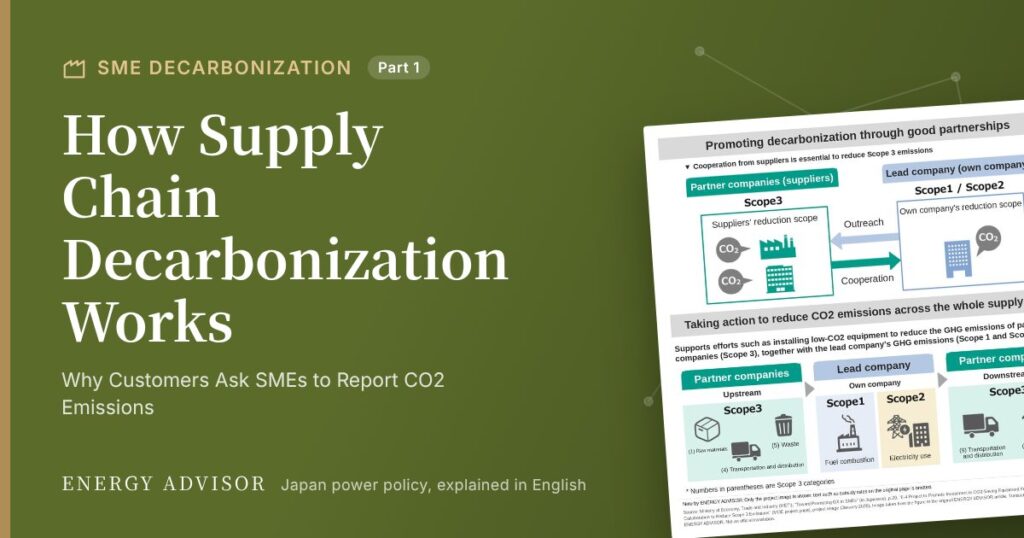
Part 1: How Supply Chain Decarbonization Works — Why Customers Ask SMEs to Report CO2 Emissions
Why Japanese SMEs increasingly receive CO2 questionnaires from their customers, what drives these requests, and where to get free public support.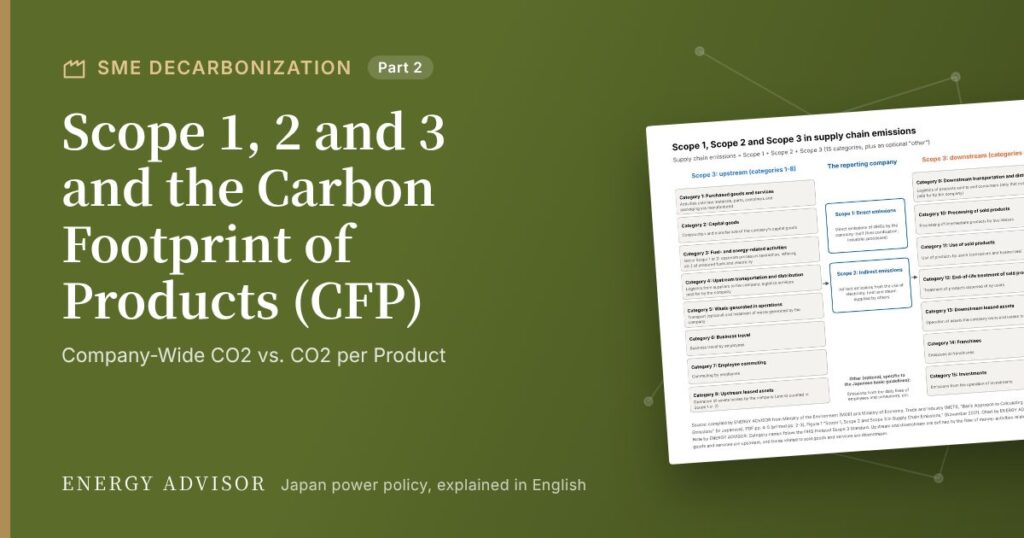
Part 2: Scope 1, 2 and 3 and the Carbon Footprint of Products (CFP) — Company-Wide CO2 vs. CO2 per Product
How Scope 1, 2 and 3 differ from the carbon footprint of products (CFP), why Scope 3 Category 1 drives requests to SME suppliers, and where to start.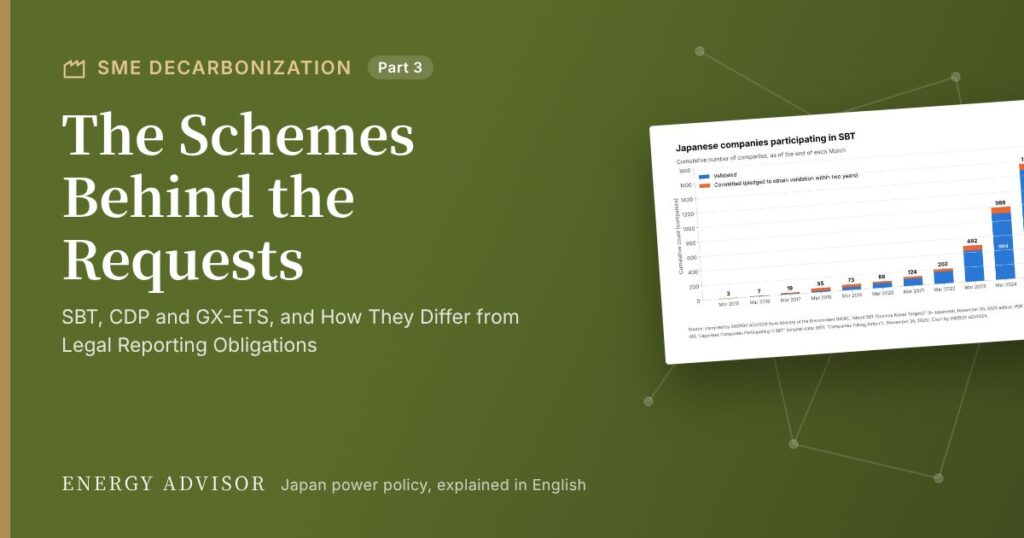
Part 3: The Schemes Behind the Requests — SBT, CDP and GX-ETS, and How They Differ from Legal Reporting Obligations
What SBT, CDP and Japan’s GX-ETS are, who runs them and whom they cover, and why most SMEs’ reporting requests come from customers rather than from the law.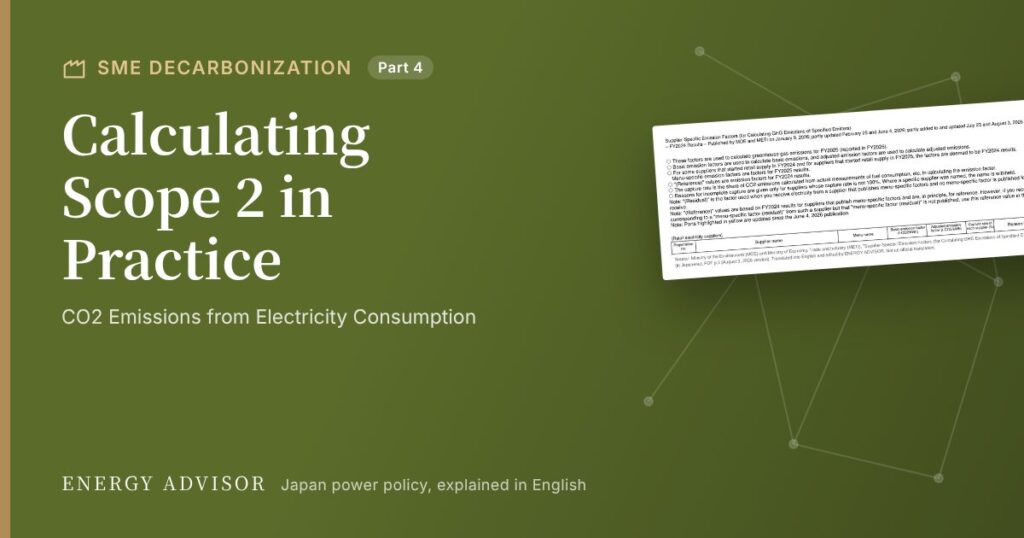
Part 4: Calculating Scope 2 in Practice — CO2 Emissions from Electricity Consumption
How Japanese SMEs can calculate Scope 2 emissions: finding kWh on the bill, looking up supplier-specific emission factors, and a worked example.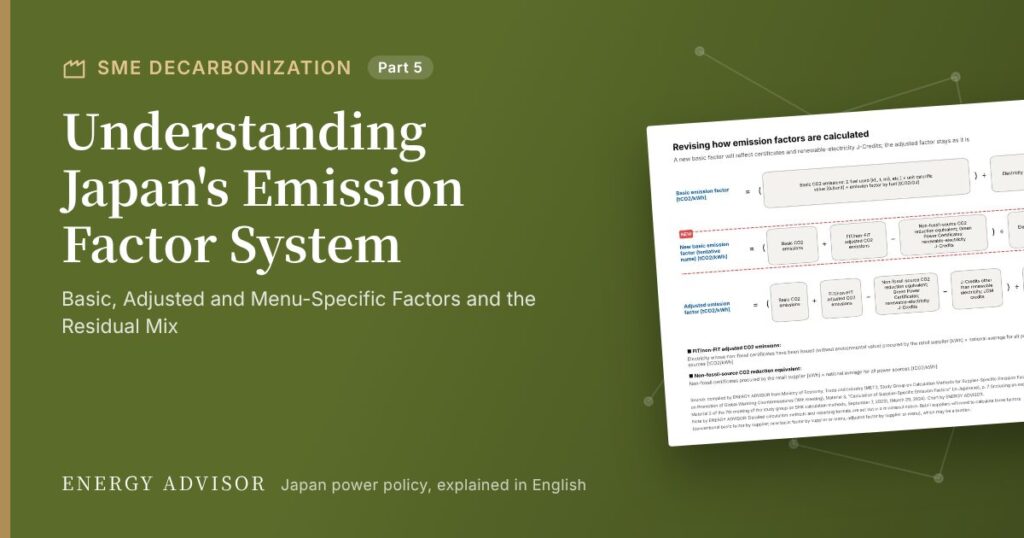
Part 5: Understanding Japan’s Emission Factor System — Basic, Adjusted and Menu-Specific Factors and the Residual Mix
How Japan’s supplier-specific emission factors work: basic, adjusted and menu-specific factors, the residual factor, and why your plan changes Scope 2.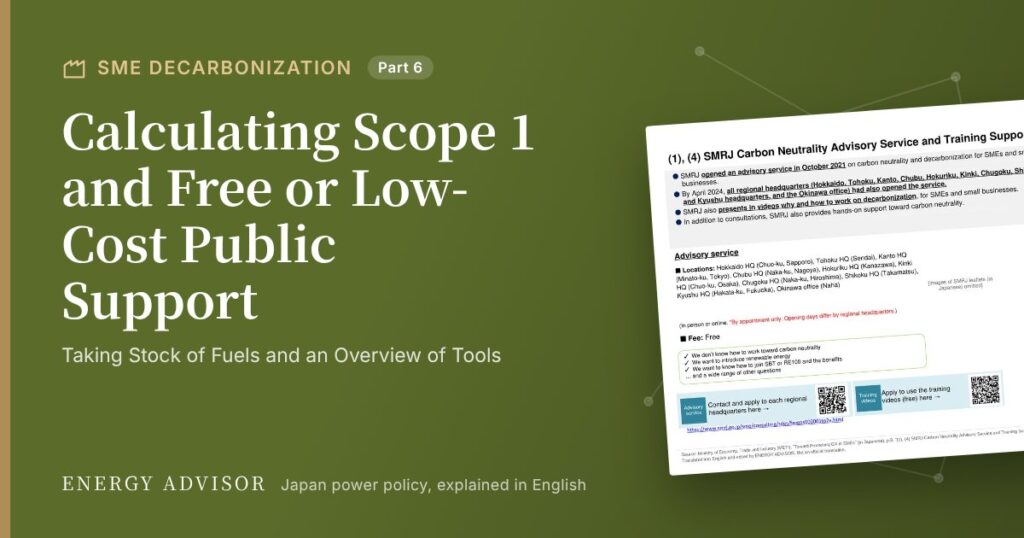
Part 6: Calculating Scope 1 and Free or Low-Cost Public Support — Taking Stock of Fuels and an Overview of Tools
How Japanese SMEs can calculate Scope 1 emissions from city gas, LPG, fuel oil and vehicle fuels, plus free and low-cost public energy audits.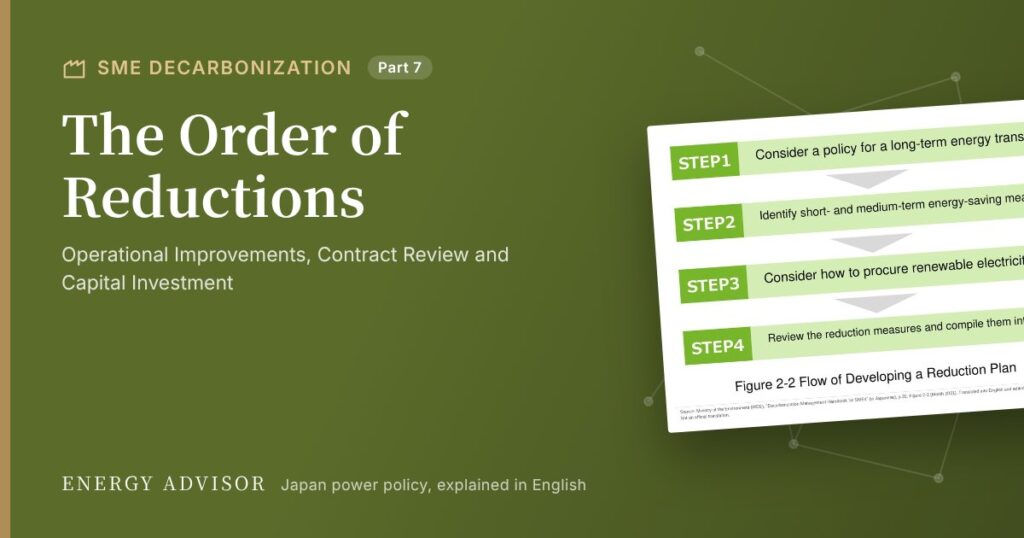
Part 7: The Order of Reductions — Operational Improvements, Contract Review and Capital Investment
A three-stage order for SMEs to cut CO2: near-zero-cost operational improvements, electricity contract review, then capital investment with subsidies.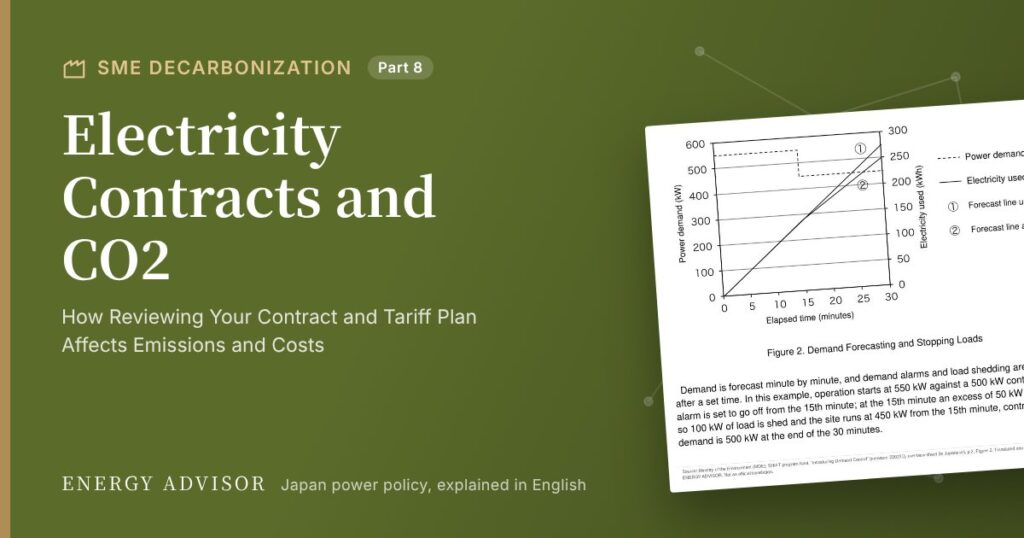
Part 8: Electricity Contracts and CO2 — How Reviewing Your Contract and Tariff Plan Affects Emissions and Costs
How Japanese high-voltage contracts work, why demand management can cut both cost and CO2, the trade-offs of renewable plans, and what to check when switching.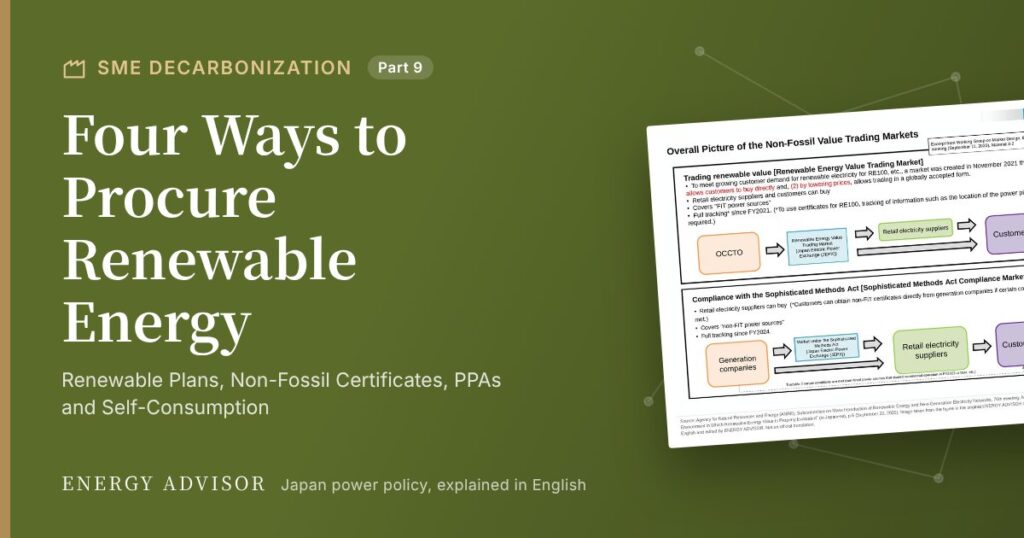
Part 9: Four Ways to Procure Renewable Energy — Renewable Plans, Non-Fossil Certificates, PPAs and Self-Consumption
Four ways for Japanese SMEs to procure renewables: renewable plans, non-fossil certificates, corporate PPAs and self-consumption solar, with Scope 2 treatment.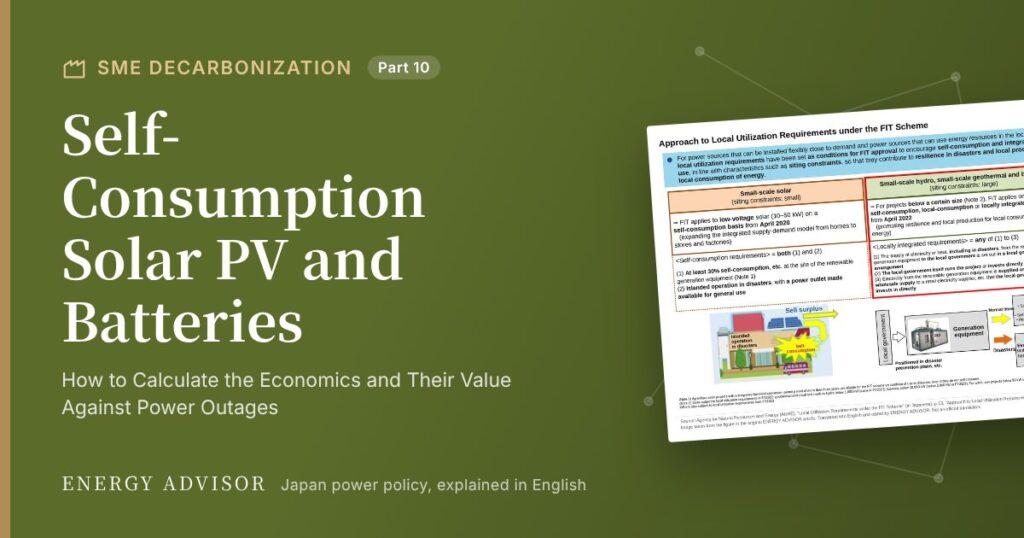
Part 10: Self-Consumption Solar PV and Batteries — How to Calculate the Economics and Their Value Against Power Outages
How SMEs in Japan can estimate the payback of self-consumption solar PV, use PPAs or leases, add batteries for outages, and which incentives may apply.
12